Palermo’s free-port status
The Florios of SicilyPalermo’s free-port status turns the city into a Mediterranean crossroads and a source of commercial opportunity for the Florios, but it also makes their prosperity vulnerable to political change. Its value rests on relative freedom from French influence and access to international trade; when regimes change, control of customs, ships, and money reveals how little independence merchants possess from the state.
Strategic Position and Trade
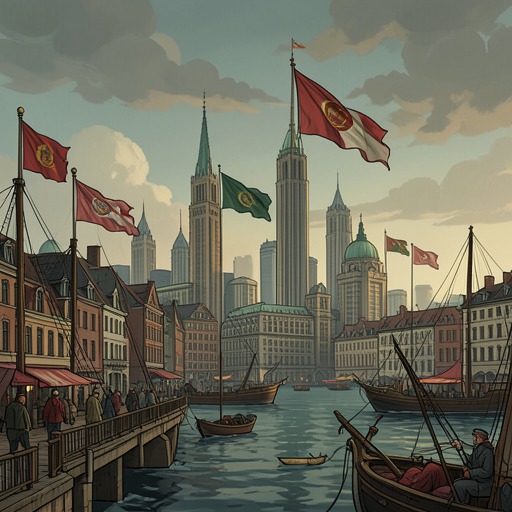
The shifting wars of the early nineteenth century redirected maritime power toward Sicily. After Great Britain made peace with France through the Treaty of Amiens in 1802, the Royal Navy strengthened its Mediterranean presence, especially around Sicily. When hostilities resumed, French attacks made merchant shipping unsafe, while British sea power faced new pressure. Palermo and Sicily became a free port outside French influence and a strategically situated center of exchange for the anti-French coalition.
That position filled the city with merchants and sailors from across Europe. French spices arrived through ports in northern Italy, British goods came from Malta, and additional merchandise reached Palermo from Turkey, Egypt, Tunisia, and Spain. The port’s commercial life was not simply local: it joined Sicily to routes shaped by imperial competition and distant suppliers. The broader spice trade depended on long chains of transport and handling, and British and French colonial commerce was bringing not only medicinal herbs but also sugar, tea, coffee, and chocolate into European markets.
The Florios’ Commercial Advantage
The Florios used Palermo’s trading position to build an international business. After separating from the Barbaros in 1803, their enterprise expanded through contacts with Neapolitan and British merchants. British suppliers became especially important: their reliability and interest in maintaining good relations with Sicilians made them valuable partners while French influence dominated much of the rest of Italy. With the Bourbons taking refuge in Sicily under British protection, Palermo stood among the last harbors beyond Napoleon’s reach and served as an important exchange point for the coalition opposing him.
The company’s warehousing practices made the port’s commercial advantages concrete. The Florios rented guarded rooms behind the customs offices within the Palazzo Steri property, storing spices in transit or awaiting sale. Import duties were paid only when goods actually entered Palermo, rather than when they first reached the warehouse. For wholesalers, paying rent on storage space could therefore cost less than paying taxes prematurely. The stockroom in Via dei Materassai eventually proved too small; despite remaining less wealthy than the Canzoneris, the Florios had advanced substantially.
Political Change and Commercial Exposure
Free-port prosperity did not protect Palermo from a change in sovereignty. From December 1816, state offices and customs were administered by Neapolitans, as were military commands. Palermo lost its power and independence, while heavier taxes, trade restrictions, and new constraints helped bring an already faltering economy to a halt. The contrast is sharp: a city whose strategic position had drawn international commerce now faced centralized administration that narrowed its commercial freedom.
Revolution again disrupted the movement of goods. During the formation of a provisional government, customs operations became disordered and outgoing ships were blocked. Merchants and sailors crowded the Customs House, where soldiers tried to hold them back. For the Florios, political upheaval was not abstract: it could stop a shipment and immobilize the business at the harbor’s administrative gates.
From Requisition to Annexation
The same tension between commercial resources and political authority recurs during the 1848 revolution. Vincenzo reports buying a large consignment of rifles in England on behalf of the revolutionary committee, while ships were requisitioned and the company was effectively forced to provide a loan. Trade had fallen by half since the revolt began, and the company’s vessel Palermo had been taken by the revolutionary regime to transport troops. The city’s maritime infrastructure, so useful to commerce, could be redirected toward military purposes by a government claiming authority over the island.
At the later crisis of regime change, Vincenzo acted to protect the Royal Bank’s liquid assets: he ordered all cash and bank drafts moved into the safe, intending to release the money when the crisis passed or convert it into the kingdom’s new currency. He expected Garibaldi’s men to requisition the substantial gold reserve within hours. After unification, he denounced the removal of the Bourbon Crown treasury to Piedmont to pay for the annexation campaign, interpreting the new order not as liberation from outside control but as another form of extraction. Across these episodes, Palermo’s free-port status signifies both access and exposure: trade made the Florios powerful intermediaries, yet the state could still redirect their ships, obstruct their goods, and lay claim to their capital.